
Phase 4 Phonics Made Simple: Longer Words, Smoother Blending


Phase 4 phonics is where reading confidence begins to grow. It is typically taught at the end of Reception and then revisited at the beginning of Year 1 to ease children back into phonics after the summer break. Children are not learning new sounds at this stage. Instead, they are strengthening what they already know and applying those sounds to longer, trickier words. This guide explains what your child is learning right now and how the Early Learner Box supports them in calm, simple steps. What Phase 4 Actually Is
Phase 4 is a consolidation stage. Children practise blending and segmenting with more accuracy and begin to track more sounds in a row. They learn to read longer words using the sounds they already know from Phases 2 and 3.
This stage can feel confusing for parents because it looks like a big jump. In reality, it is a gentle progression that builds confidence and fluency.
Adjacent Consonants
Children learn to blend two consonants smoothly without adding extra vowel sounds. This is the skill behind reading words like stop, swim, and hand.

Why it matters for your child
Smooth blending helps children read more clearly and confidently. It also supports spelling because they begin to hear each sound more accurately.
Longer Words with More Sounds
Children begin to read longer words that contain five or six sounds. These words require children to track more sounds in a row and blend them into a single smooth unit. As they practise this skill, early reading fluency begins to appear. Children learn to hold more sounds in memory, blend more confidently, and read longer words without hesitation.
Why it matters for your child This builds stamina, accuracy, and confidence. Children start to feel proud of reading longer words independently, and they begin to recognise that longer words are manageable and not overwhelming.
Early Polysyllabic Words
Children begin to break words into syllables naturally. This helps them read longer words without feeling overwhelmed. Why it matters for your child
They learn that longer words can be broken into manageable parts and read with ease.
Gentle Ways to Support Phase 4 at Home
Keep blending slow and smooth, giving your child time to hear each sound clearly.
Help them track longer words by pointing to each sound as they blend.
Break longer words into syllables together to make them feel manageable.
Notice and celebrate small wins; confidence grows when progress is recognised.
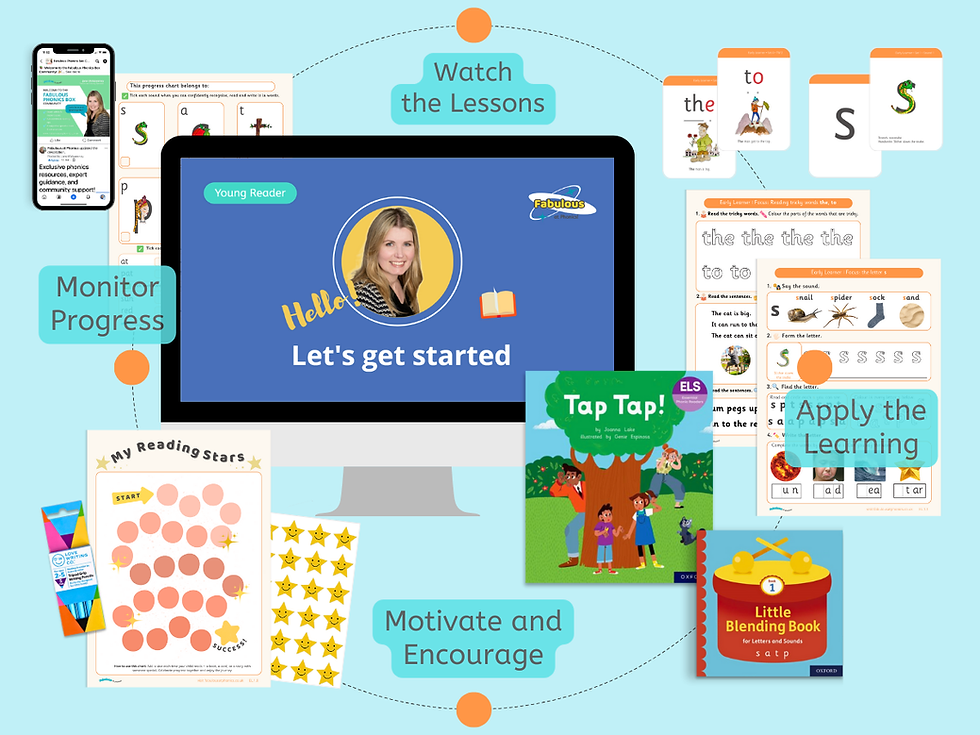
How the Early Learner Box Supports Phase 4 The Early Learner Box supports Phase 4 by giving children a complete, mapped experience. The lessons provide the structure, guiding children through adjacent consonants, longer words with more sounds, and early polysyllabic words in calm, simple steps. Around these lessons sit the activities, flashcards, resources, and books that reinforce the same skills in different, playful ways. Children meet the same learning point several times, in formats that feel achievable and familiar.
This combination matters. Phase 4 can feel challenging because children suddenly need to blend more sounds, track longer words, and read with greater accuracy. The box breaks these skills down across short lessons and hands‑on practice that help children blend more smoothly, recognise patterns, and feel proud of reading longer words independently.
For parents, the box removes the pressure of planning. Everything is already mapped to the school progression, so you know your child is meeting the right sounds at the right time. For children, it feels secure, enjoyable, and manageable. The lessons guide them. The activities and resources strengthen them. The books give them a chance to apply what they have learned.
Together, they make Phase 4 feel calm, clear, and confidence‑building.

Where Reading Confidence Begins Phase 4 is often the moment children begin to feel like readers. Once they can blend adjacent consonants and track longer words with more sounds, something shifts. They recognise patterns more easily, blend with less hesitation, and start to enjoy the feeling of reading words that once seemed too tricky.
These small steps build long‑term confidence. Children begin to trust themselves. They feel proud when they read a longer word independently, and they start to carry that confidence into the next stage of phonics. Phase 4 is not just a consolidation stage. It is a confidence stage, and the gentle structure of the Early Learner Box helps children experience that sense of progress in a calm, secure way.
Explore the Early Learner Box If you would like to support Phase 4 at home in a calm, structured way, the Early Learner Box gives you everything you need. The lessons guide your child through the skills they are practising in school, and the activities, flashcards, resources, and books help them revisit those skills in simple, enjoyable ways. It is a gentle way to build confidence and keep reading feeling positive.
More Support for Early Reading
If you would like more clarity about phonics, you can explore additional blog guides here. Each one explains the school progression in simple, parent‑friendly language and gives you gentle ways to support reading and writing at home.
If you would prefer something practical to use right now, you can visit the Free Resource Packs page. These packs offer mapped, expert‑led support that fits easily into real home life.


Comments