
How to Help Your Child Blend and Segment in Phonics


You’re Not Alone
Learning to segment and blend can feel like a real sticking point for many early readers, and if your child is finding it tricky, you are absolutely not alone. These skills take time, repetition, and lots of gentle support before they start to feel automatic. It’s completely normal for children to need many small exposures before everything clicks.
The good news is that progress doesn’t come from long sessions or complicated activities. It comes from tiny, consistent moments where children hear the sounds, connect them to meaning, and begin to trust themselves as readers.
In this guide, I’m walking you through the simple steps that make the biggest difference. No overwhelm, no pressure, just clear, parent‑friendly support you can use at home. Let’s walk through it together.

Why Segmenting & Blending Feel Hard
Segmenting and blending ask a lot of a young learner’s brain. Children are trying to hear each individual sound, remember the order, connect those sounds to something meaningful, and then say the whole word smoothly. That’s a big cognitive load for early readers who are still developing their working memory and attention.
It’s also completely normal for children to need time to tune into the pattern. Holding sounds in sequence is a developmental skill, not a sign of struggle. For example, when a child hears c‑a‑t, their brain has to keep each sound in place long enough to blend them together. Some children do this quickly, while others need many gentle repetitions before it becomes automatic.
Understanding this “why” helps you support your child with patience and clarity, knowing that slow progress is still real progress.
The Four Steps: Hear • Connect • Build • Grow
These four steps form the heart of early reading. When we break them down into simple, manageable moments, children feel more confident and less overwhelmed. Each step builds on the last, helping your child move from hearing sounds to reading whole words with growing independence.
⭐ Step 1: Hear
Children need to hear each individual sound clearly before they can blend them. Slow, crisp sounds make all the difference. When you model c – a – t with space between each sound, you’re giving their brain time to process and hold onto the sequence. Rushing the sounds makes blending much harder, so gentle pacing is key.
⭐ Step 2: Connect
Children learn best when the sounds link to something meaningful. Picture clues help them anchor the sounds to a real word they already know. If they see a picture of a cat, they have a clear target in mind before they even start blending. This connection reduces guesswork and builds confidence.
⭐ Step 3: Build
Hands‑on word building helps everything click. Moving letters, tiles, or paper squares allows children to see the structure of the word and physically manipulate the sounds. This is far more effective than worksheets alone because it turns an abstract process into something concrete and playful.
⭐ Step 4: Grow
Progress often looks small at first, and that’s completely normal. Celebrate the tiny wins: the moment they hear the first sound, the moment they blend two sounds, the moment they try again without prompting. These little steps build the confidence they need to keep going. Growth happens through repetition, connection, and encouragement.
Common Mistakes Parents Don’t Realise They’re Making
It’s so easy to feel unsure when supporting early reading at home, and many of the challenges children face come from tiny habits that parents don’t even realise they’re doing. These aren’t “wrong”; they’re simply things no one explains clearly. A few gentle tweaks can make blending and segmenting feel much easier for your child.
○ Saying the sounds too quickly
When sounds are rushed together, children don’t have enough time to process each one. Slowing down gives their brain space to hold the sequence.
○ Adding an “uh” to consonants
This is incredibly common. Sounds like m, t, and p should be short and crisp. Adding “muh” or “tuh” makes blending harder because the child is trying to blend extra sounds that don’t belong.
○ Jumping to worksheets too soon
Worksheets can feel like the “right” thing to do, but hands‑on practice is far more effective at this stage. Children need to hear, say, and move the sounds before they can record them.
○ Expecting blending before segmenting is secure
Children often need to be able to break words apart (segmenting) before they can put them together (blending). If blending feels hard, go back to segmenting for a while. It strengthens the foundation.
These small shifts can make a big difference, helping your child feel more confident and less frustrated as they learn.

A Simple Activity to Try Today Here is a quick, low‑prep way to help your child practise segmenting and blending at home.
○ Choose a simple CVC word
Pick a short, familiar word like cat, dog, or sun.
○ Say each sound slowly
Model the sounds one at a time so your child can hear them clearly.
○ Let your child build the word
Use magnetic letters, paper squares, or any hands‑on letters you have at home.
○ Blend the sounds together
Run your finger underneath and say the whole word together.
If you’d like ready‑made CVC cards and picture prompts to make this even easier, you can download my free phonics pack.

Reassurance and Encouragement
Learning to segment and blend takes time, and every child moves at their own pace. What might look like slow progress on the surface is often steady learning underneath. Each time your child hears a sound, tries to blend, or has another go, they are building the foundations they need for confident reading.
Your support makes a bigger difference than you realise. The small moments you share at home help your child feel safe, capable, and ready to learn. Celebrate the tiny steps, stay patient with the process, and remember that confidence grows through connection and consistency.
Where to Go Next
If you would like more support with segmenting and blending, you can download my free phonics pack here. It includes CVC cards, picture prompts, and simple activities you can use at home.
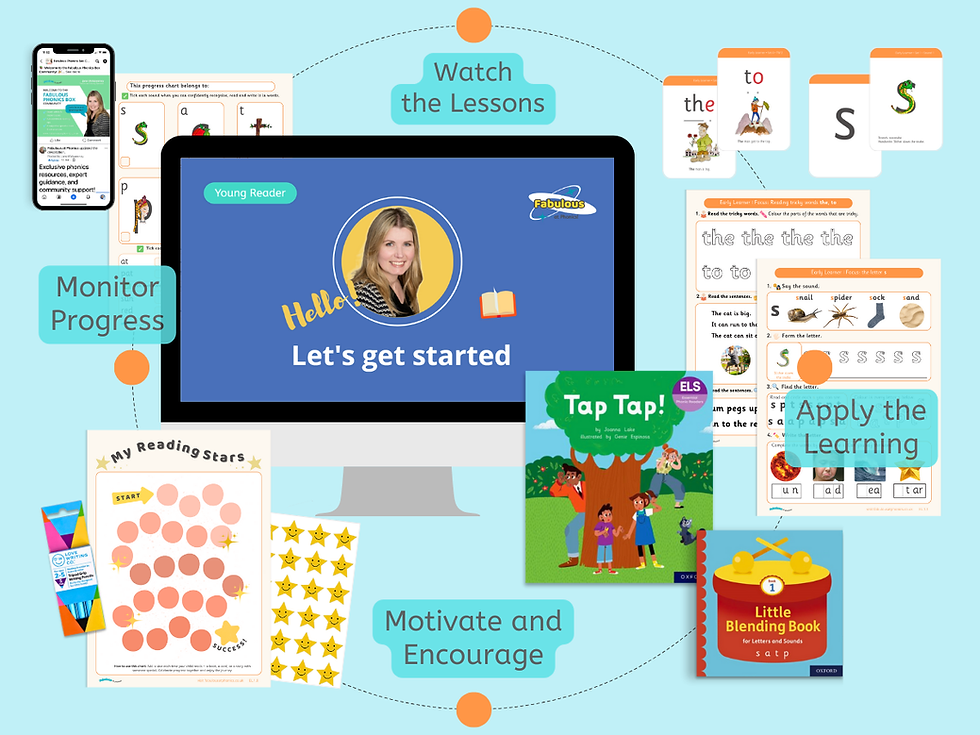
If you would like something more hands‑on to support this stage, my Early Learner Phonics Box is designed for children aged 4–5 who are taking their very first steps into reading. Each monthly box includes expert‑led video lessons, playful tools, guided parent prompts, and carefully chosen books that help your child recognise sounds, blend words, and build confidence. You can explore everything inside the box here.


Comments