
How Our Expert‑Crafted Sheets Support Little‑and‑Often Learning


A Gentle Start to Reading Practice
Children don’t need long or intense practice sessions to make progress with early reading. What makes the biggest difference is short, steady revisits that feel familiar and safe. When practice is calm and predictable, children relax into the learning and sounds begin to stick. This gentle, repeated exposure is at the heart of how phonics works, and it’s why the sheets in my Early Learner and Growing Learner boxes are designed for simple, sustainable use at home.

Why Repetition Matters
Children learn to read through repeated exposure to the same sounds and patterns. Each short revisit strengthens the brain pathways that help these sounds feel familiar and secure. When practice is low‑pressure and predictable, the brain can focus on recognising the pattern rather than managing stress or new information. This is why little and often is so effective: it supports the way the brain naturally learns and helps confidence grow steadily over time.
How Little and Often Fits Into Everyday Life
Little and often works because it blends naturally into the rhythm of family life. Short practice moments can happen at the breakfast table, in the car or during a quiet minute before bed, which makes them far easier to keep going than long, planned sessions. Children respond well to this gentle routine because it feels achievable and never overwhelming. When practice becomes a small, predictable part of the day, reading starts to feel calm, familiar and manageable for everyone.
Strategy 1: Keep It Short Short practice moments are far more effective than long sessions because they keep children focused and emotionally settled. Two or three minutes is enough for a quick revisit of a sound or word, and this small amount of practice is much easier to maintain each day. When children know the activity will be brief, they join in more willingly and experience success straight away. These tiny pockets of practice build confidence without adding pressure for families. Strategy 2: Keep It Familiar
Children make the most progress when they revisit the same sounds until they feel truly secure. Familiar practice reduces cognitive load, which means children can focus on recognising the pattern rather than managing new information. Returning to a sound or word they already know helps them experience success quickly, and this sense of ease builds confidence far more effectively than introducing something new each day. This is exactly how phonics is designed to work: steady revisits that strengthen understanding over time.

Strategy 3: Keep It Steady Small, regular revisits are what help reading confidence grow over time. When children return to the same sounds across the week, they begin to recognise them more quickly and with less effort. These moments don’t need to be planned or formal; they can happen while waiting for the kettle to boil, during a quiet minute before bed or on the walk to school. This gentle consistency builds a sense of security around reading, showing children that learning is something they can approach with ease.

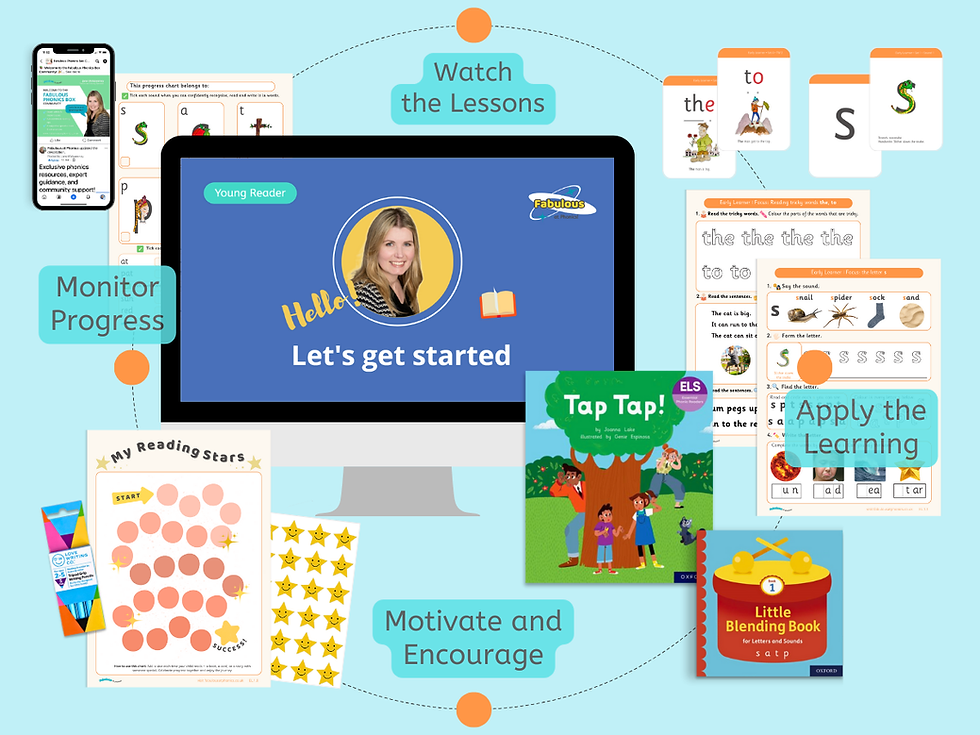
Colour for Clarity, Greyscale for Ease Every resource in my boxes is designed by a phonics specialist who understands how children actually learn, not by a publisher creating for mass printing. The full‑colour versions support clarity, engagement and motivation, while the greyscale reverses are intentionally crafted for repeated use. Because children need to revisit sounds many times, each sheet includes a crisp greyscale version that photocopies cleanly, keeps ink costs low and maintains high print quality in every setting. Each page is also built with varied, carefully sequenced activities such as saying the sound, forming the letter, finding it and writing it, so children meet the same learning point in multiple ways. This combination of expert design, affordable re‑printing and learning‑led structure is something publishers rarely consider, but teachers always do. Children learn best when reading feels safe, steady and unhurried. Little and often isn’t just easier for families to manage; it’s the approach that helps confidence grow naturally over time. Every small moment of practice makes a difference, and the calm, familiar rhythm you’re building is already supporting your child more than you realise. You’re doing better than you think.



Comments